


Connections Connect The Words
4.586.00 Reviews
App Specs
- Version
- 1.0.74
- Updated On
- License
- Free
- Downloads
- 10,000+
- Developer
- InQuisiTiVe Media
- Categories
- Word
- Platform
- Android
Screenshots
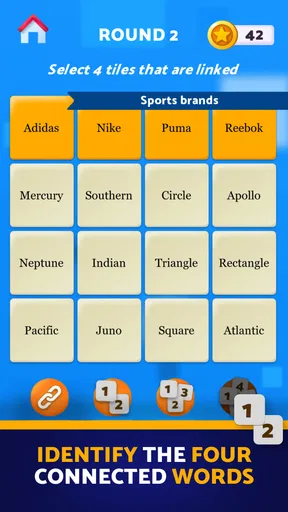

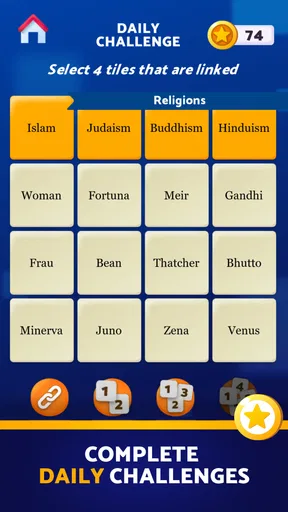
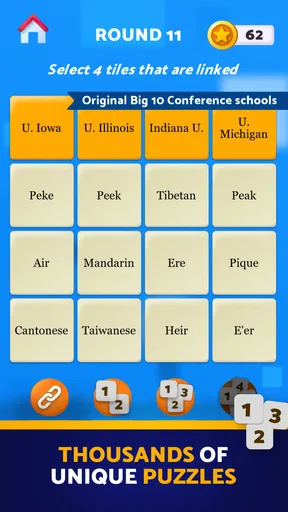
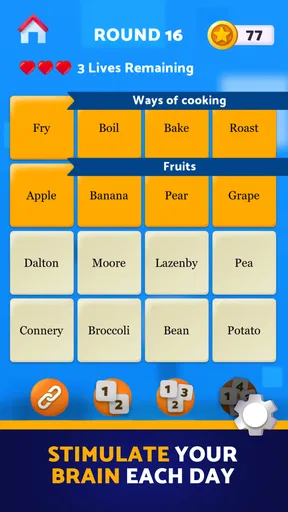
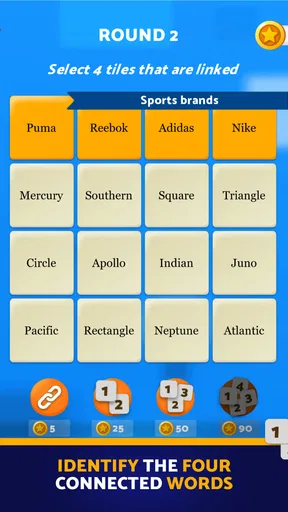
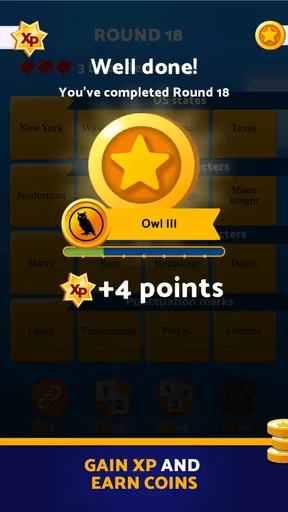
 Analysis by AppCompare
I spent time with Connections Connect The Words as a casual word game, paying particular attention to how easy it feels to read, understand, and play in different everyday situations. It comes from InQuisiTiVe Media and takes the familiar idea of grouping related words, but presents it as a focused puzzle experience rather than a broad collection of unrelated mini-games. The result is simple to start, yet demanding enough to make me slow down and question my first impressions.
The game is free to install and is rated for Everyone, which makes it approachable for families and casual players. It has reached over ten thousand installs and holds a 4.5 average from around four hundred ratings, so there is already a modest group of players behind it. In my experience, its strongest appeal is not flashy presentation but the small mental tension created when several words seem to belong together and only one interpretation is actually useful.
How Connections Connect The Words feels to use
I find the main pleasure in Connections Connect The Words comes from weighing several plausible meanings rather than racing toward the first match. In this section, I’ll look at how that central idea shapes the feel of a session and why a careful first scan can make the difference between a satisfying puzzle and a frustrating one.
Readable puzzles and straightforward navigation
The central idea is easy to understand: examine a group of words and connect the ones that share a meaningful relationship. That clarity matters because a word puzzle can become frustrating before the challenge even begins if the interface makes the rules obscure. Here, the concept gives me an immediate reason to inspect every word, compare possible relationships, and test a group when I think I have found one.
I like this format for short sessions because it does not require a long tutorial or a complicated control scheme. A player who already enjoys word association games can begin almost immediately, while someone new to the genre can learn by looking at the puzzle itself. The limited interaction also helps reduce navigation demands: the main task is thinking about language, not learning a large set of menus or controls.
That said, the simplicity of the concept places more responsibility on the puzzle layout and text presentation. When a word has several possible meanings, I need to read carefully rather than skim. This is a strength for players who enjoy nuance, but it can feel demanding for anyone who prefers direct clues or more explicit guidance. The game rewards close attention, and that includes attention to the way each word is written.
For readability, I found it useful to treat the puzzle as a visual checklist instead of trying to solve everything in one glance. I first scan the full set, then mentally mark obvious relationships, and finally return to words that might fit more than one group. This approach is especially helpful for players who find dense word arrangements tiring. It turns a potentially overwhelming screen into a sequence of smaller decisions without changing the game’s rules.
Worth Reading Before You Choose

EA SPORTS FC Mobile 26 Is a Bigger Football Game, but It Takes Time

Flipboard Shows What News Apps Must Do Beyond the Feed

Switching to Android Auto Means Rethinking Your Driving Routine

Google Calendar Makes a Crowded Week Easier to Manage

Ludo King Makes the Most of the Minutes Between Plans

Baby Panda World Brings Quick Play to Modern Phones, but Its Game Library Feels Busy
The developer, InQuisiTiVe Media, has chosen a structure where the language itself is the main source of difficulty. That means the game does not need a crowded interface to stay engaging. It also means that anyone with reading difficulties, limited vocabulary in English, or trouble distinguishing similar concepts may experience a steeper challenge than a typical casual game would create.
Different abilities and the physical effort of play
From a motor perspective, this is a relatively light game because solving depends far more on selecting words than on rapid movement or precise timing. I can approach each puzzle at my own pace, which makes it more comfortable than games that demand quick taps, repeated gestures, or coordinated actions under pressure. That slower rhythm is valuable when I am tired or when I want a game that does not punish a delayed response.
The trade-off is that word selection still requires enough precision to choose the intended items. Players with limited hand movement, tremors, or difficulty targeting small interface elements may find repeated selection less comfortable, particularly during a long session. I would approach it with a larger device when possible, since extra screen space can make reading and tapping feel less cramped than on a small phone.
The game’s text-heavy nature also makes visual comfort important. Players who experience eye strain may prefer short rounds with breaks instead of trying to continue until every puzzle is finished. I found that solving in a well-lit room and holding the phone at a comfortable distance made more difference than rushing. Those are ordinary habits, but they matter more here because the entire challenge is built around noticing small distinctions between words.
For players with color-vision differences, the practical question is whether the interface communicates selection and mistakes through more than color alone. I would not choose this game on the assumption that every state is supported by multiple visual cues. Anyone who relies on strong non-color indicators should test the current version, listed as 1.0.74, on their own device before committing to extended play. That is not a criticism of the word concept itself; it is a reminder that a simple puzzle can still depend heavily on how clearly selected items are shown.
Sound is not central to the experience in the way it is in an action game. That makes the game easier to fit into quiet environments and more suitable for players who prefer a visually led activity. It also means that players who need audio guidance for important state changes may find the experience less comfortable unless the visual feedback is sufficiently clear on their particular device.
Where the game fits into everyday life
I see this as a good companion for small gaps in the day: a quiet break between tasks, a short commute when I am seated safely, or a few minutes before bed. Because the challenge is based on words rather than reflexes, I can pause mentally between attempts and return without needing to rebuild a complicated strategy. It works best when I have enough attention to compare meanings, not when I am trying to multitask.
A realistic use case would be a family member opening the game after dinner and inviting someone else to debate the categories. The puzzle naturally supports conversation because two people can agree on individual word relationships while disagreeing about the intended group. That makes it more social than its simple controls suggest. Still, the game is not ideal for use while walking, driving, or handling another task that requires visual attention. The words need concentration, and safe use should come first.
It can also suit learners who want to exercise vocabulary informally, although I would not treat it as a structured language course. The puzzles encourage recognition of associations, multiple meanings, and category boundaries, but they do not replace lessons, dictionaries, or guided practice. For a fluent English reader looking for mental stimulation, that open-ended quality is enjoyable. For someone still building basic vocabulary, it may feel like being tested without enough explanation.
The Everyone age rating makes the game broadly approachable, but age suitability and ability suitability are not identical. A younger player may understand the interaction while still finding some word relationships too abstract. Likewise, an older player may enjoy the reasoning but need larger text or more frequent breaks. The best fit depends less on age than on reading confidence, comfort with ambiguity, and the ability to interact with the words on the screen.
What may still create friction
The biggest barrier is conceptual ambiguity. A strong connection can be hidden behind a common word that also belongs with several other options. I enjoy that uncertainty because it makes a correct solution feel earned, but it can be discouraging for players who expect every clue to have one obvious interpretation. If you become annoyed by puzzles that require trial, elimination, and reconsideration, this may not be the right word game for you.
Another limitation is that the experience is not designed around broad accessibility explanations. A player who needs specific support for text size, contrast, screen reading, or alternative input should inspect the current build directly rather than assume that a clean-looking puzzle will meet those needs. Device-level settings may help in some situations, but enlarged text can affect how much of the puzzle fits on screen, and that can create its own inconvenience.
The free entry point is welcome, but in-app purchases range from $2.99 to $18.99 per item. That does not make the game expensive by default, yet it is worth remembering if you prefer completely purchase-free games. I would begin with the free experience and decide whether the available content and pacing justify spending anything. The purchase range is a practical consideration for families, especially when a device is shared or used by younger players.
Compared with a crossword, this game asks for less spelling and more classification. Compared with a traditional word search, it offers less visual hunting and more interpretation. Compared with a daily guessing game, it can feel less tied to a single answer and more focused on relationships among several answers. I prefer it when I want flexible reasoning rather than a vocabulary test with one narrow target. Someone who wants clues, definitions, or a long-form grid may be happier with a crossword or a dedicated word-learning app.
My most useful strategy is to separate certainty from possibility. I reserve the words that form an unmistakable group, then avoid forcing the remaining words into a category simply because they share a loose association. A second helpful habit is to read each word in more than one sense: as an object, an action, a name, or part of a phrase. This is where the game becomes more than a matching exercise, and it is also where players with language-processing challenges may need extra time.
I also recommend treating mistakes as information rather than as a reason to restart mentally. An incorrect group can reveal which interpretation is too broad and make the remaining relationships clearer. That approach reduces the pressure to solve instantly and makes the game more manageable for players who need a slower pace. It does not remove the difficulty, but it changes the experience from guessing to structured elimination.
Who should try it and who should choose something else
I would recommend this game to people who enjoy wordplay, category puzzles, and discussions about whether two ideas truly belong together. It is particularly suitable for players who want a calm challenge that can be played without fast reactions. It also has potential as a shared activity, since comparing interpretations can be as entertaining as reaching the solution.
I would be more cautious about recommending it to someone who needs strong instructional support, has difficulty reading small text, or dislikes ambiguity in puzzle design. Players looking for spoken prompts, highly configurable accessibility controls, or a clearly structured learning path should consider a different type of word app. The same is true for anyone who wants a competitive action game rather than a reflective language challenge.
Its current audience size and 4.5 average suggest that the basic idea is connecting with players, but popularity does not settle the accessibility question for an individual. I would judge it by a short personal test: can you read the word set comfortably, select items without strain, understand what has been chosen, and enjoy reconsidering an answer when the first grouping fails? If the answer is yes, the game’s compact design is likely to work well for you.
My inclusive verdict
Connections Connect The Words succeeds because it keeps the interaction uncomplicated while making the language surprisingly deep. I appreciate that it does not require speed, complex controls, or a large commitment of time. Its best moments come when a familiar word shifts meaning and forces me to rethink the entire board. That kind of challenge can be mentally rewarding without becoming noisy or physically demanding.
It is not equally comfortable for every player. Reading load, ambiguous categories, screen-dependent feedback, and the need for accurate selection can all become barriers. The free price makes trying it easy, while the optional purchases mean I would still keep an eye on spending. For me, the right way to approach it is as a patient, visually focused word puzzle rather than as a universally accessible game.
Overall, I would suggest giving it a try if you want a thoughtful alternative to crosswords, word searches, and single-answer guessing games. Start with short sessions, use a larger screen when readability matters, and solve by separating certain connections from tempting but weak ones. Its inclusive strength is the unhurried reasoning; its main limitation is that the words themselves can be the barrier. For readers who are comfortable with that trade-off, this is a free word game with enough interpretive depth to earn a regular place in a casual puzzle rotation.
Pros
- Simple word-linking gameplay that is easy to understand from the first puzzle.
- Short levels make it suitable for quick sessions during breaks or commutes.
- Gradually increasing difficulty keeps the challenge engaging without feeling overwhelming.
- Clean interface lets you focus on the puzzle instead of unnecessary distractions.
- Helpful hints can assist when you get stuck on a particularly difficult connection.
Cons
- Some puzzles may rely on word associations that feel subjective or unclear.
- Repeated puzzle patterns can make later levels feel less varied.
- Hint availability may be limited
- encouraging patience or optional purchases.
- Players seeking fast action may find the relaxed pace too slow.
- Progress can feel repetitive if you play many levels in one sitting.
FAQs for Connections Connect The Words
What is Connections: Connect The Words?
Connections: Connect The Words is a word-grouping puzzle game in which you sort a collection of seemingly unrelated words into groups that share a common theme. Each puzzle challenges you to identify four correct categories while avoiding misleading combinations. It is easy to understand, but the difficulty increases as the word choices become more ambiguous and several possible connections appear convincing.
How do you play Connections: Connect The Words?
To play, review the words displayed on the puzzle board and select four that belong to the same category. Submit your selection when you are confident, then continue until all groups have been discovered or your mistakes are used up. The main challenge is recognizing the intended relationship rather than simply finding any connection, so careful comparison and thinking about alternative meanings are essential.
Is Connections: Connect The Words suitable for beginners?
Yes, the game is approachable for beginners because its rules are simple and each round can be understood within seconds. However, knowing the rules does not guarantee easy solutions. Some categories rely on wordplay, cultural references, double meanings, or less obvious associations. New players may need a few rounds to learn the game’s logic, but the gradual challenge makes it suitable for casual and experienced puzzle fans.
Can Connections: Connect The Words be played offline?
Whether the game works fully offline can depend on the specific version, device, and how puzzles are delivered. Core puzzle gameplay may be available without a constant connection, but features such as advertisements, daily updates, statistics, cloud synchronization, or newly downloaded content may require internet access. If offline play is important to you, check the app-store description and test the game after disabling mobile data or Wi-Fi.
Is Connections: Connect The Words free to download?
Connections: Connect The Words may be free to download, but availability of optional purchases, advertising, or premium features depends on the edition published for Android or iOS. Before installing, review the store listing for information about in-app purchases and subscriptions. The basic experience is generally designed for quick, casual sessions, while paid options may remove advertisements or unlock additional content and conveniences.


